


Mesa Andina L Pattern 1
Mesa Andina L Pattern 1
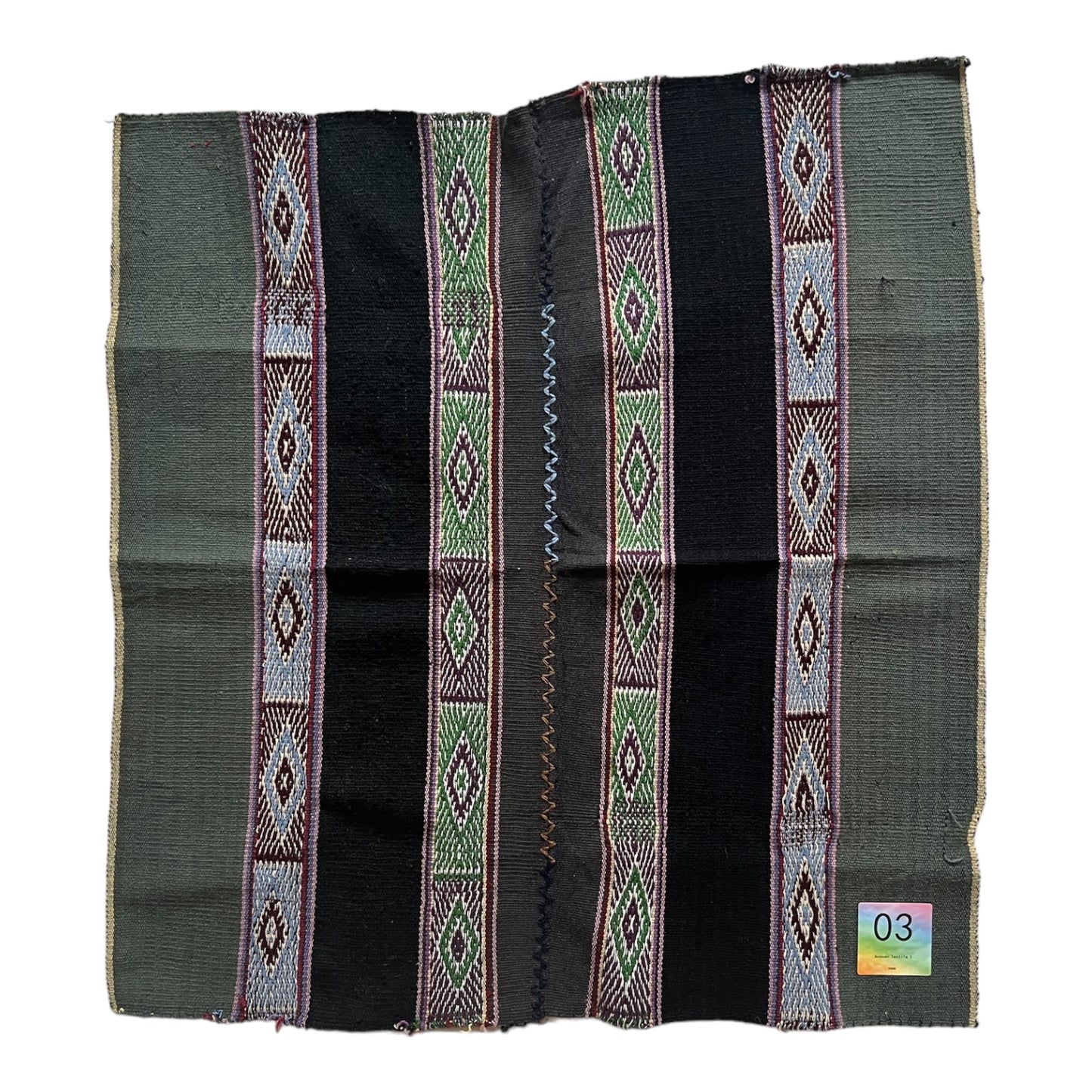
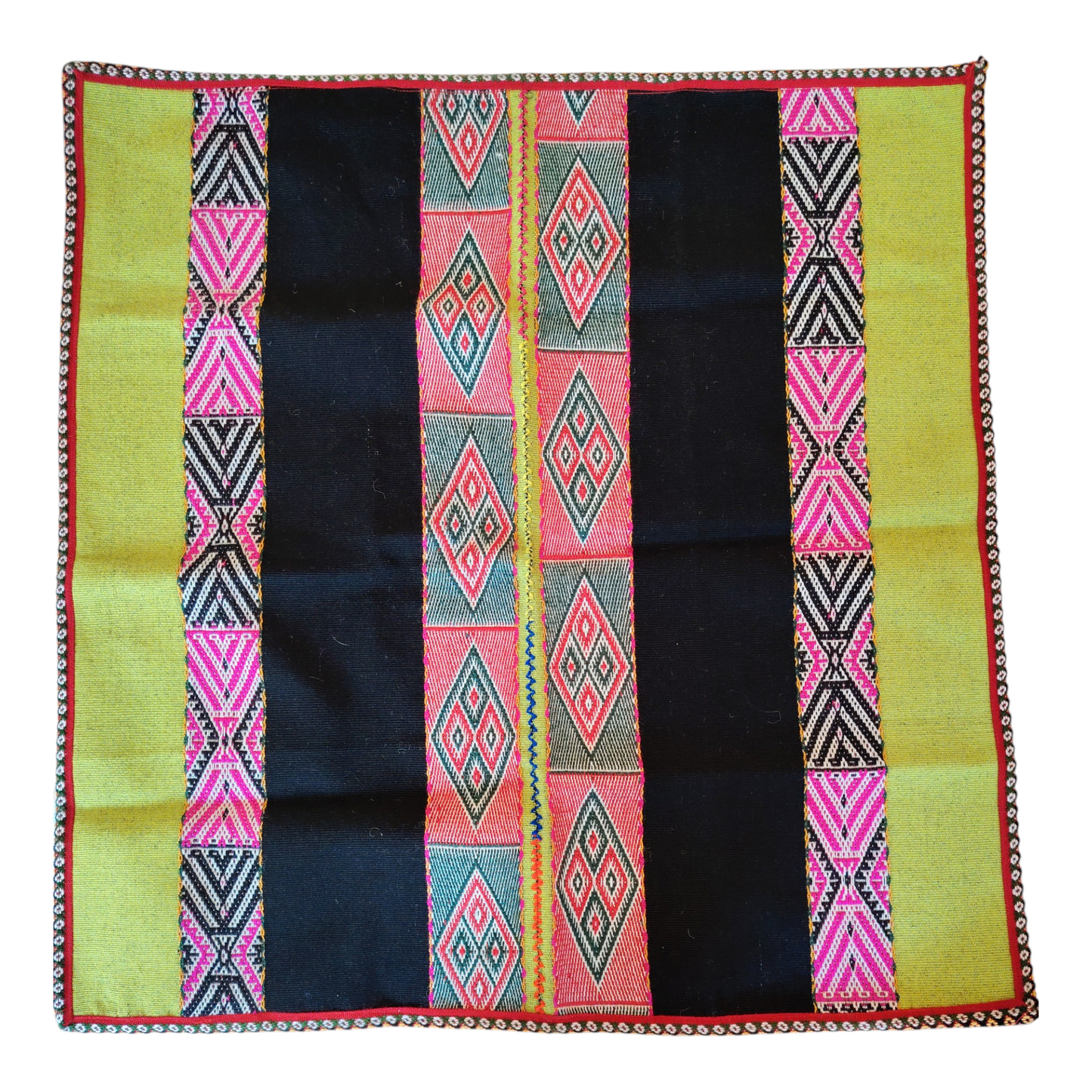
Every Peruvian altar cloth from SONQO is unique – let your cloth find you! This «Mesa Andina», also called «mesa quepe» or «mastana», is used by shamans for traditional rituals.
- - Altar cloth for spiritual practice
- - for ritual objects
- - Q'ero handcrafted from premium wool



+ - Weitere Informationen
In the Despacho ceremony, offerings are arranged in a mandala-like pattern for Pachamama (Mother Earth), Apus (the spirits of the mountains), and other sources of power. Each offering symbolizes an aspect of life. Through this offering, resistance in all these areas is released, allowing one to celebrate life holistically. This all-encompassing acceptance and gratitude lead to compassion for the well-being of humanity, nature, and the universe.
This cloth with geometric patterns (approx. 61x63 cm, 500g) was woven by women near the city of Ocongate, Cusco, Peru. By purchasing a Mastana, you directly support the weavers and the continuation of their traditional way of life.
Pachamama (Mother Earth) is the central, all-encompassing motif in Quechua culture. The cosmology of Andean communities is a deeply nature-oriented and earth-centered way of life. Pachamama is believed to be an extremely intelligent, self-aware being who is both infinitely wise and infinitely merciful.
The seam in the center of the mastana, where the pattern is reflected, is intentionally sewn in a very conspicuous manner. Represented as the spine, the central line is also an expression of earthly duality; of the masculine and feminine principles.
Fair prices for the weavers
The Mastana is handwoven by women in the Cusco region of Peru. By purchasing it, you directly support the weavers and the continuation of their traditional way of life.
SONQO works without intermediaries, and the weavers receive a price that allows them to live well. These connections are established through SONQO founder Ángel Herrera, who knows all of these weavers personally.
Material: Natural alpaca wool mixed with sheep's wool
Culture : Andean culture of the Q'eros
Packaging: No additional packaging
Recommendation: Wash by hand with soap and cold water and dry with solar heat and fresh air.
Produced near the city of Ocongate, Cusco, Peru
How do I use a Mesa cloth?
A mesa cloth can be used as a sacred altar and base for ceremonies. Simply place the ritual objects on the cloth. It then serves as an energetic boundary.
Traditionally, mesa cloths are also used as protective coverings for shamanic power stones and other energetically charged objects. The stones and other objects are wrapped in the cloth in a specific way.
Who is the Q'ero community?
The Q'ero people number between 3,000 and 4,000 today, spread across 14 villages. Known as keepers of ancient knowledge, the Q'eros are among the most respected mystics of the southern and central Andes. Practitioners (or masters) of this tradition call themselves Paqo – they are simultaneously priests, healers, shamans, and mystics. The Q'eros are also simple farmers and one of the few peoples in South America who have preserved the knowledge of the Inca spiritual tradition in a very pure form. The remote Q'ero villages lie at altitudes of up to 5,000 meters in the snow-capped Vilcanota mountain range, the highest in southeastern Peru.
Why are textile prices so high?
SONQO strives for a circular economy and win-win-win situations at all levels. All participants, including the environment, should benefit from this collaborative effort. Therefore, it goes without saying that price-cutting mechanisms such as intermediaries are eliminated. The weavers receive a living wage, paid in cash.
Where does the wool come from?
The wool for the Mesa Quepe comes from alpacas and sheep in the Ocongate region of Cusco, Peru. It is processed, dyed, and woven by hand according to ancient craft traditions by women of the Q'ero community.
Why do SONQO products not have any labels or certificates?
SONQO is committed to a holistic lifestyle and avoids certificates and labels because they only ever consider partial aspects of a holistic ecology. SONQO thus emphasizes a holistic approach.
